Yoga for Vaginismus: Introduction to the Chakras
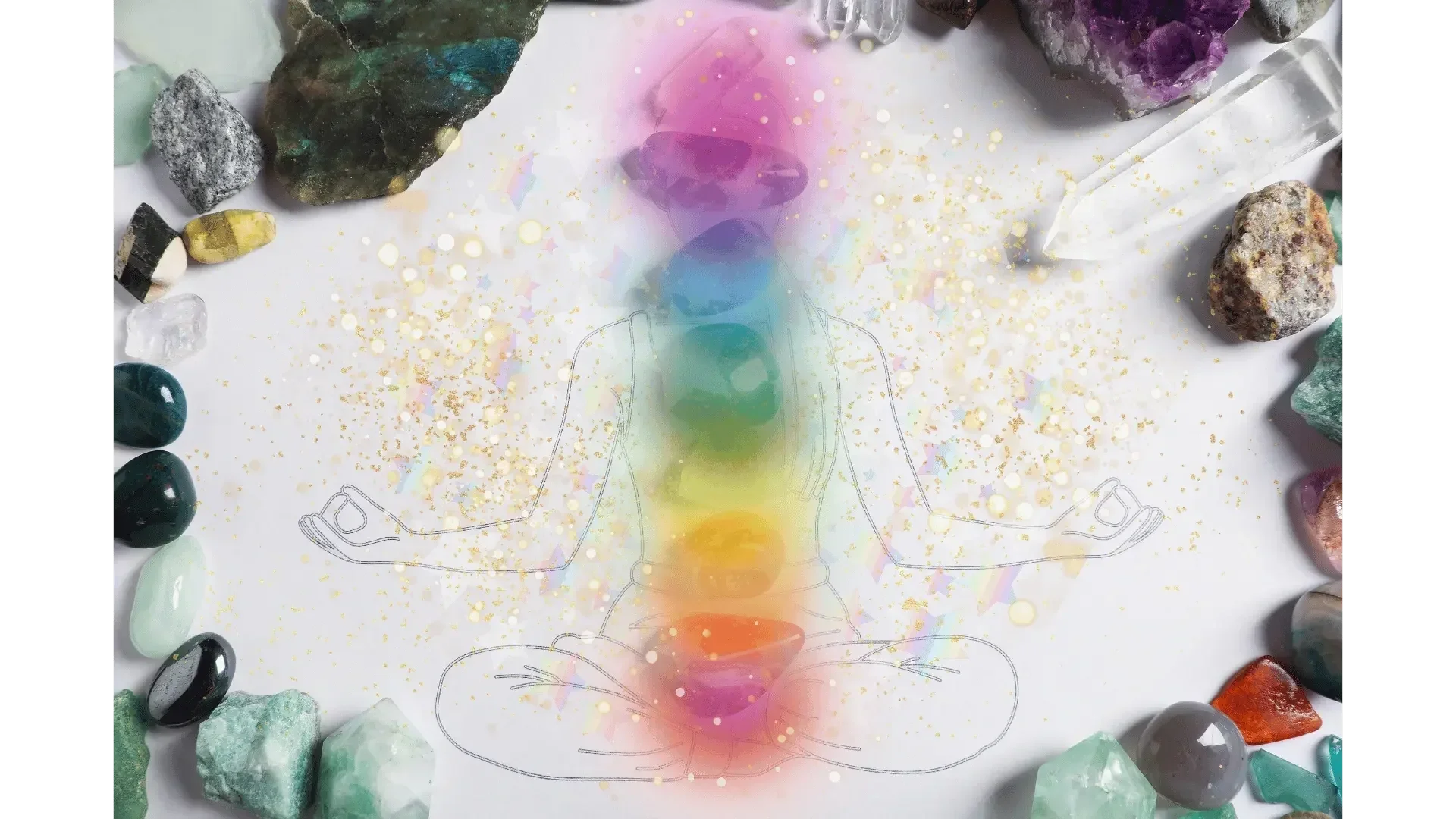
In yoga, chakras are energy centers within and around the body. While they are associated with physical points, they aren't necessarily physical or tangible in nature. You can't see or touch them, but in certain practices, you may be able to sense them, in a way. They are part of what is known as the "subtle body" or energetic body. For those of us working with vaginismus, the chakra system offers a way to explore what's happening beyond the purely physical— the fear, the tension, the emotional weight— and begin to work with it.
References to the chakras originally appeared in ancient Vedic texts and continued to show up in a variety of Buddhist and Hindu sources throughout the centuries. The number of total chakras varies by tradition, but many use seven chakras aligned with the spinal column.
It wasn't until the 20th century that the familiar color associations with the chakras were popularized. These associations were developed by New Age Western practitioners interested in the intersection of Eastern yogic teachings, Western psychology, and color theory. That being said, many people have benefited from them— on a practical level, they make a system that may feel complicated or difficult to understand a little more tangible. I might not be able to understand my solar plexus chakra, but I can visualize the color yellow in and around my abdomen.
While this may sound a bit out there to a person unfamiliar with yoga, I think about the chakras in the context of how I think about stress and anxiety within the body. I may know I hold and feel tension in my shoulders, low back, or hips. In the case of vaginismus, I hold tension in my pelvic floor (and/or my jaw). Those places of tension may be due to stuck energy. But I don't have to stay that way. I can use movement, sound, breath, and visualization techniques to work with those spaces and the things I may be experiencing in my body, letting the subtle body influence the physical.
The chakras can be a helpful tool for people working with vaginismus who haven't benefited from— or who have plateaued with— a solely physical approach. They provide a framework to address the mental, emotional, physical, spiritual, and energetic blocks that may be preventing us from releasing tension or numbness and experiencing positive sensations.
At Yoga for Vaginismus, we'll explore the seven chakra system, but please keep in mind that different traditions hold different perspectives on the number of primary chakras. I encourage you to do your own research if this intrigues you, and find a system that aligns with you. Below is a brief description of each chakra, its associated color, its location, and how it may relate to your experience with vaginismus.
Muladhara (Root) Chakra
Color: Red
Location: Pelvic floor / base of the spinal column
Represents: Our basic sense of safety and security
For vaginismus: This one is foundational— literally. It sits right at the pelvic floor. When our root chakra is out of balance, we may feel hypervigilant, unsafe in our own bodies, or stuck in a fight-or-flight response. If you've ever thought, "My body just won't let me," that sense of deep, protective bracing often lives here. Where might that come from? This chakra relates to the core programming and beliefs we hold around health, sexuality, sensuality, what it means to be a woman, our role in relationships and society, etc.
Svadhisthana (Sacral) Chakra
Color: Orange
Location: Sexual and reproductive organs
Represents: Creativity, sensuality, and pleasure
For vaginismus: This is the seat of our relationship to pleasure, desire, and sexuality. Many people with vaginismus experience shame around sex, a disconnect from pleasure, or a feeling of being "broken." Working with this chakra can help us reconnect with sensuality on our own terms— not just sexually, but creatively and emotionally, too.
Manipura (Solar Plexus) Chakra
Color: Yellow
Location: Navel
Represents: Personal power and boundaries
For vaginismus: Vaginismus can make us feel powerless— like our bodies are acting against our own wishes. This chakra speaks to our sense of agency and our ability to set boundaries, whether that's with a partner, a medical provider, or a treatment timeline. Strengthening this center can help us reclaim a sense of control in our healing.
Interested in yoga practices that can support vaginismus and other pelvic floor dysfunction? Check out Yoga for Vaginismus on YouTube.
Anahata (Heart) Chakra
Color: Green
Location: Heart
Represents: Connection to others, compassion, and love
For vaginismus: Isolation and shame can make it difficult to feel close to partners, friends, or even ourselves. When this chakra is blocked, we may withdraw from intimacy— not just physical, but emotional. Opening the heart chakra can support us in receiving love and compassion, including the kind we direct inward.
Vishuddha (Throat) Chakra
Color: Blue
Location: Throat
Represents: Speaking and hearing truth
For vaginismus: Have you ever struggled to explain what you're going through to a partner? Felt dismissed by a doctor? Swallowed your own needs to avoid an uncomfortable conversation? This chakra is about finding and using your voice— advocating for yourself, communicating your boundaries, and being honest about your experience.
Ajna (Third Eye) Chakra
Color: Indigo
Location: Between the eyebrows
Represents: Intuition and insight
For vaginismus: When we're caught in cycles of anxiety, overthinking, or dread, it can be hard to hear what our bodies are actually telling us. This chakra is about reconnecting with our inner knowing— learning to trust our own experience rather than spiraling into fear about what might happen.
Sahasrara (Crown) Chakra
Color: Violet
Location: Crown of the head
Represents: Connection to something greater than ourselves
For vaginismus: The journey with vaginismus can feel isolating and, at times, hopeless. The crown chakra invites us to zoom out— to connect with meaning, purpose, or a sense that healing is possible even when progress feels slow. It reminds us that we are more than this one condition.
In upcoming posts, we'll dive deeper into each of these chakras— what they feel like when they're balanced and unbalanced, and practical tools you can use to work with them. Stay tuned.
Interested in yoga practices that can support vaginismus and other pelvic floor dysfunction? Check out Yoga for Vaginismus on YouTube.