The Psoas: A Missing Link in Your Vaginismus Healing?
I never thought much about my psoas until my pelvic floor physical therapist pointed to it as a place worth paying attention to. I’d been dilating and exercising, and yet I still plateaued in my progress.
It turned out a significant part of what I was working against wasn’t in my pelvic floor at all. It was higher up and deeper in — a long, quiet muscle running from my lower spine down through my pelvis that had been holding on for a very long time.
The psoas doesn’t always get much attention in online vaginismus conversations. But for me, it was a key puzzle piece worthy of understanding and working with because of its relationship to the pelvic floor, diaphragm, and the nervous system.
What Is the Psoas, and Why Should You Care?
The psoas major is the deepest core muscle in the body. It runs from the lower thoracic and lumbar vertebrae down through the pelvis, attaching to the top of the femur — the thigh bone. It’s the primary muscle that connects your spine to your legs, and it passes directly through the pelvic bowl on its way there.
The psoas and the pelvic floor are neighbors who share a wall. As the psoas travels through the pelvis, its surrounding connective tissue becomes continuous with the connective tissue of the pelvic floor. They’re not the same structure, but they’re woven together — so when the psoas is holding tension, that tension doesn’t stay contained. The pelvic floor feels it too.
There’s also a postural piece. When the psoas is chronically tight, it can tug the pelvis forward into a tilt — a bit like a bowl tipped slightly off-center. That shift in alignment puts strain on the pelvic floor muscles and can make it harder for them to release and soften the way we need them to for comfortable penetration.
And it doesn’t stop there. The psoas also has a fascial connection running upward to the diaphragm — the dome-shaped muscle that drives our breathing. That makes the psoas the literal middle layer in a three-part stack: diaphragm on top, pelvic floor on the bottom, psoas connecting them both in the middle. When one layer is holding tension, the others tend to follow. And when one layer releases — say, through slow, deep breathing — that settling signal can travel down through the psoas and into the pelvic floor. Which is part of why breath is such a foundational part of this work, and not just a nice-to-have.
The Psoas and Your Nervous System
The psoas is sometimes called the "fight-or-flight muscle." Research suggests it is closely tied to the autonomic nervous system, and because the muscle is rich in sympathetic nerve fibers, it is highly responsive to stress activation. When your brain perceives danger — whether that's a physical threat, an anxious thought, or an anticipated painful experience — the sympathetic nervous system fires, and the psoas is one of the first muscles to respond. It contracts, drawing the body inward and upward in the classic protective curl.
In an acute emergency, that's brilliant. The problem is that when the nervous system remains in a state of chronic stress or hypervigilance, the psoas may stay contracted — even when the original threat is long gone. Over time, this constant contraction can lead to pain, discomfort, and fatigue in the muscle — and, importantly, can keep signaling to the nervous system that it is still not safe.
This is the feedback loop that shows up so frequently in vaginismus: a nervous system that learned to brace, a psoas that contracted in response, and a pelvic floor that followed suit. The body is not broken. It is doing exactly what it was designed to do. But at some point, the protective pattern outlives its purpose.
Samskaras, Aparigraha, and the Body's Grooved Patterns
In yoga philosophy, samskaras are the grooved patterns — mental, emotional, and physical — that form through repetition and experience. Every time a pattern is repeated, the groove deepens. This is true of thought patterns, relational patterns, and yes, muscular holding patterns.
The psoas, in this framework, can become a kind of somatic samskara — a place where the body has practiced bracing so many times that the contraction becomes the default. It's not a flaw. It's a groove worn deep by the wisdom of self-protection.
But grooves can be softened. New patterns can be laid down alongside the old ones.
This is where aparigraha comes in — the yogic principle of non-gripping, non-grasping. Aparigraha invites us to notice where we are holding on, and to gently, without force, begin to release. Not abandonment or erasure. Just softening.
When I work with the psoas in my own practice, I try to bring this quality to it. Not a demand that it be released, but an invitation. "I see you. I understand why you held on. It's okay to soften now."
Tending to the Psoas as Nervous System Work
Psoas work, done with care, is nervous system work. It's not about forcing a deep stretch or "releasing" tension through discomfort. It's about creating the conditions — safety, slowness, breath — in which the psoas can begin to remember that it doesn't have to brace.
A few things that support this:
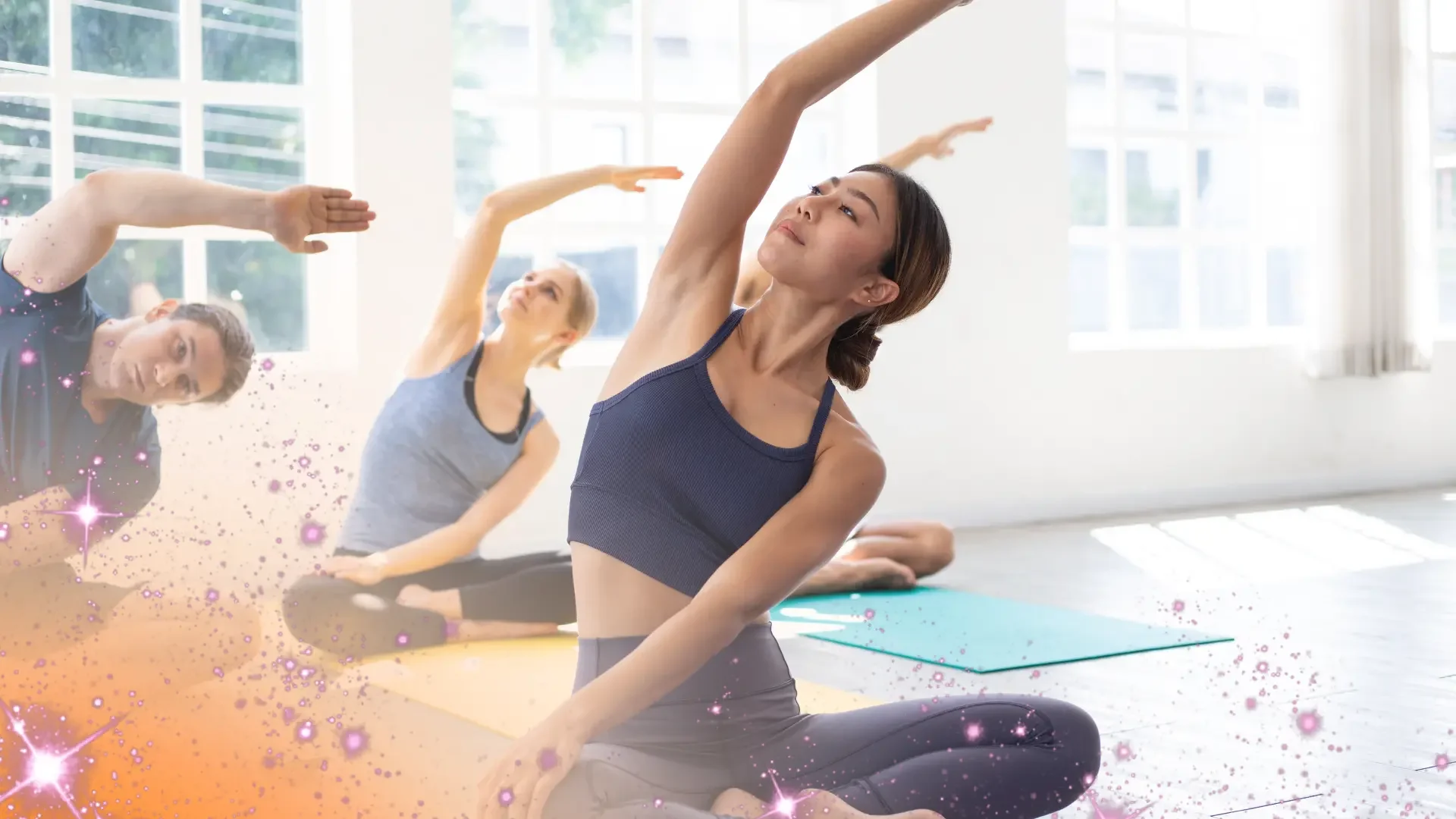
Slow, gentle movement that passes through the hip flexors without demanding that they lengthen quickly. The nervous system needs time to register that the movement is safe.
Myofascial release (MFR), which works with the connective tissue surrounding the psoas to soften holding patterns without forcing a stretch.
Yin-style holds that invite passive lengthening with the support of props — again, slow, passive, and paired with breath.
Breath. The diaphragm has its own fascial connection to the psoas, so deep, slow breathing is one of the most direct ways to send a settling signal down through the whole chain.
This kind of practice doesn't replace pelvic floor work or dilation practice. It supports it by helping the nervous system arrive at a calmer baseline before you begin.
Ready to Work With Your Psoas?
Here are four classes from my library to get you started — each with a different approach, so you can meet yourself wherever you are on any given day:
30-Minute Psoas Slow Flow — A shorter slow flow practice for days when you want gentle movement without a big time commitment.
50-Minute Psoas Slow Flow — A longer, more spacious slow flow for when you have time to settle in.
Psoas Myofascial Release — A softer, connective-tissue focused practice for releasing holding patterns without stretching.
Psoas Yin Yoga — Longer passive holds with prop support, inviting a deep, receptive release.
And if you'd like support connecting this work to your broader vaginismus healing — including nervous system regulation practices and a guided dilation program — you can explore Nervous System Skills for Vaginismus and Dilating 101 for more.
Your body has been doing its best to keep you safe. Psoas work is one way to gently, over time, let it know that safety is available.