Dilating with Intention: How Guided Meditation Can Transform Your Practice
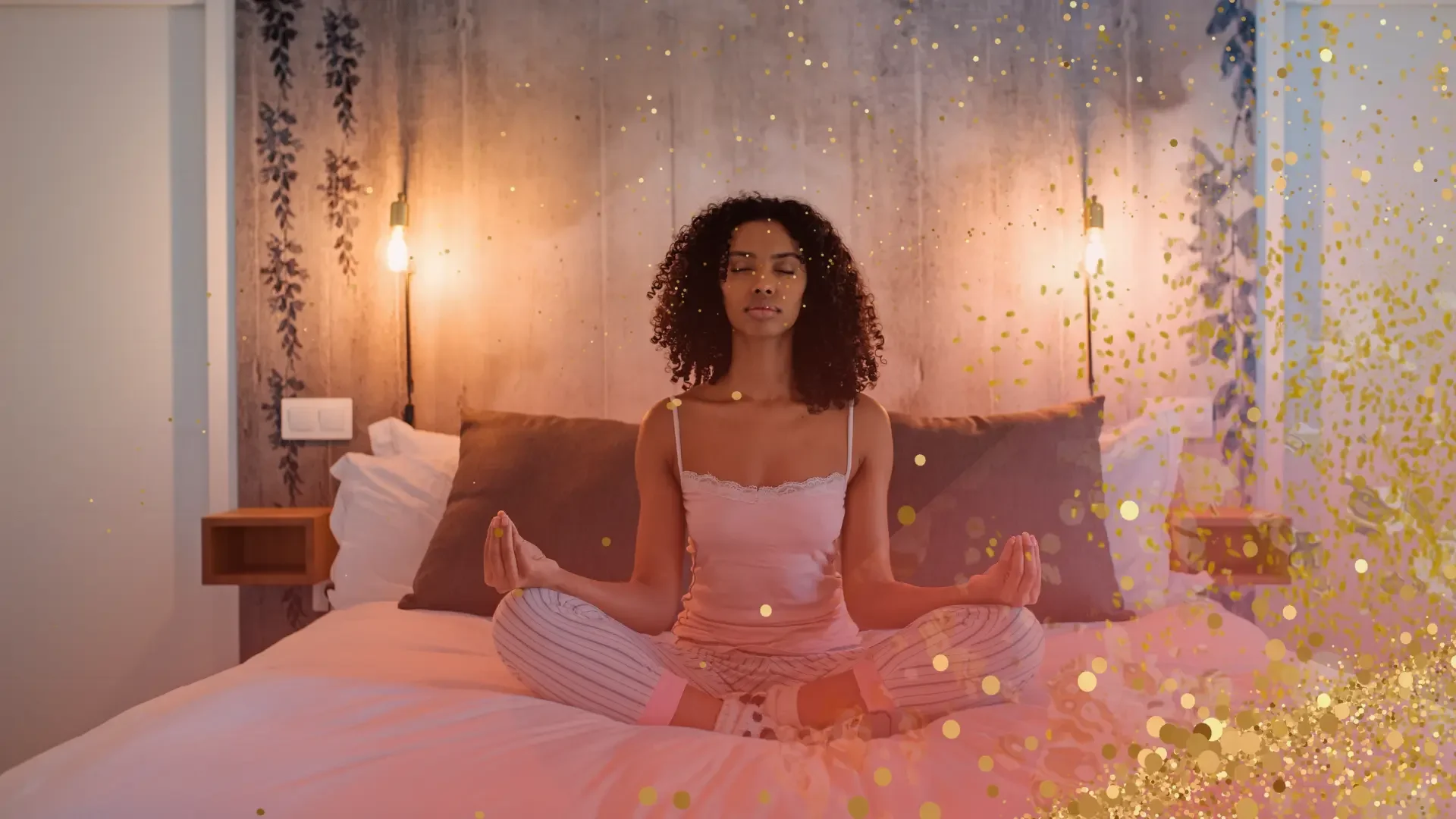
If you've ever set up for a dilating session with frustration, you're not alone. For many people working through vaginismus, dilating can start to feel like a task to get through. But showing up to dilating on autopilot or with gritted teeth can actually work against you. The body doesn't soften on command. That's where intention comes in — it reframes your dilating practice into a way to deepen your connection to your body and provide yourself with care.
What It Means to Dilate with Intention
Intention is about arriving at your practice with a sense of why — and a quality of presence that shifts the experience from mechanical to meaningful. In yoga, this concept is called sankalpa: a heartfelt intention or resolve. It's not a goal to achieve; it's more like a compass. A sankalpa for dilating might sound like:
I am here to listen to my body, not push through it.
I am learning to feel safe in my own body.
I am worthy of pleasure and ease.
Setting an intention before you dilate creates a mental container for the session — something to return to when your mind wanders or your body tightens. It moves the practice from something you're doing to yourself into something you're doing with yourself. That shift matters.
Research supports this, too. Studies on mindfulness-based interventions for chronic pelvic pain and sexual dysfunction suggest that present-moment awareness during practice — rather than dissociation or avoidance — is associated with reduced pain catastrophizing and improved treatment outcomes.
The Tool That Changed My Own Practice
Before my vaginismus journey, I fell in love with guided meditations done in yoga workshops or through programs like To Be Magnetic. One day it struck me to use them while I was dilating. They kept me present in my body — and awake (I used to fall asleep a lot while dilating, which could have been from fatigue or a parasympathetic response).
I began wondering what it would be like to have a meditation specifically designed for vaginismus. Around this time, I began studying with sex, love, and relationship coach Layla Martin, who offered similar guided meditations. Layla's practices were amazing. They were not quite what I needed for where I was in my journey, but they gave me the validation that I could create something just right — cue Goldilocks — for vaginismus.
What Are Power Practices?
Power Practices are guided audio meditations designed specifically for the vaginismus healing journey. They aren't relaxation tracks or generic body scans — each one explores a specific theme that tends to come up for people with vaginismus, from shame and fear, to confidence, pleasure, and connection.
The themes are aligned to the chakra system of yoga.
If you're not familiar with chakras, here's a simple way to think about them: they're energy centers in the body, each associated with different aspects of our physical, emotional, and psychological experience. Many themes of each chakra mirror what the research community call the biopsychosocial model of healing: the understanding that vaginismus isn't only a physical condition. It's shaped by our biology, our psychology (fear, shame, trauma, beliefs about our bodies), and our social experiences (messaging about sex, relationships, healthcare interactions).
The chakra system covers all of that. Safety, pleasure, worthiness, love, voice, intuition, connection — these aren't just spiritual concepts. They're real dimensions of what it means to heal from vaginismus.
Here's a look at each Power Practice and the theme it explores:
🟥 De-Armoring — Muladhara (Root) Chakra
Safety, letting go of shame and fear
The root chakra is associated with our sense of safety and belonging in the world. For people with vaginismus, this is often ground zero — the place where fear, shame, and protective tension live. De-Armoring invites you to gently release what you may be holding on to, without forcing anything open before it's ready.
🟧 You Make Me Feel... — Svadhisthana (Sacral) Chakra
Pleasure and sensation
The sacral chakra governs creativity, sensuality, and pleasure — all things that vaginismus can quietly put on hold. This practice explores what it feels like to be present in sensation, on your own terms, at your own pace, and to use pleasure as a tool to navigate away from pain.
🟨 Power Play — Manipura (Navel or Solar Plexus) Chakra
Confidence and worthiness
The navel chakra is our center of personal power. So much of the vaginismus journey involves feelings of inadequacy — wondering why your body won't "cooperate," comparing yourself to others, doubting whether you're doing it right. Power Play is a practice for reclaiming confidence and your sense of worthiness, regardless of where you are in the process.
🟩 Love and Happiness — Anahata (Heart) Chakra
Feeling wholly loved by ourselves and others
The heart chakra is about love — self-love, relational love, and the capacity to receive care. For many people with vaginismus, boundaries can feel complicated, and shame can create walls, making it hard to feel deserving of tenderness. This practice explores what it's like to hold healthy boundaries while softening those walls to feel truly held.
🟦 Hear Me Roar — Vishuddha (Throat) Chakra
Expression and finding your voice
The throat chakra is our center of communication and authentic expression. Vaginismus can make it hard to speak up — to healthcare providers, to partners, to ourselves. Hear Me Roar is about finding that voice: the one that knows what it needs and isn't afraid to say so.
🟪 Whole Body Intuition — Ajna (Third Eye) Chakra
Full body somatic exploration
The third eye chakra is associated with inner knowing, perception, and trust in our own awareness. This is a full body somatic exploration — a practice for tuning into and listening to the wisdom that already lives in your body.
⬜ Divine Love — Sahasrara (Crown) Chakra
Connection to your highest self and unconditional love
The crown chakra connects us to something larger than ourselves — a sense of spiritual belonging and being fully loved for who we are. Divine Love explores what it feels like to exist in a space of wholeness and unconditional acceptance.
You don't have to have a yoga background, a spiritual practice, or any particular belief system to use or benefit from these practices. You just have to be willing to show up — a little more intentionally than before.
And that's really the purpose of dilating with intention. Not perfection or a breakthrough every session. Just arriving on purpose, with care for the person doing the arriving.
Ready to Try a Power Practice?
Power Practices are part ofDilating 101 — a guided audio meditation program designed to help you dilate with calm, confidence, and intention. If you've been dilating on autopilot, feeling disconnected, or just looking for something to make the process feel a little more human, this is a good place to start.
Please note: This post is intended for educational purposes and is not a substitute for medical or pelvic floor physical therapy care.