Rooted and Released: Yoga Poses for Vaginismus That Work With Your Root Chakra
Maybe you've tried to relax. Maybe you've been told to "just breathe." Maybe you've spent time on a dilating routine and still felt like your body was bracing against you, no matter how much you wanted to move forward.
If that sounds familiar, you're not alone, and you're not broken. What you might be experiencing is a nervous system that has learned, very effectively, to protect you. The challenge is helping it learn that it's safe to let go.
That's where yoga comes in. And more specifically, that's where the root chakra — and the poses that support it — can become a genuinely powerful part of your healing toolkit.
What Does the Root Chakra Have to Do With Vaginismus?
In yogic philosophy, the Muladhara chakra (from the Sanskrit mula meaning "root" and adhara meaning "support" or "base") is located at the base of the spine and pelvic floor. It's the first of the seven chakras, and it governs our most primal needs: safety, stability, belonging, and survival.
When Muladhara is balanced, we feel grounded. At home in our bodies. Safe enough to be present.
When it's dysregulated through trauma, chronic stress, or persistent threat, we brace. We contract. We hold.
Sound familiar?
From a physiological standpoint, this maps remarkably well onto what we understand about vaginismus. Vaginismus involves involuntary contractions of the pelvic floor muscles, often driven by the body's threat-detection system. The amygdala — the brain's alarm bell — can trigger protective muscular guarding even in the absence of actual physical danger.
In other words: the root chakra's territory is the pelvic floor's territory. Working with one is working with the other.
The poses below are chosen specifically because they address the root chakra's themes of safety and groundedness and have real physiological benefits for pelvic floor tension.
A Note Before You Begin
These poses are supportive tools, not a cure. Yoga works beautifully alongside pelvic floor physical therapy, dilating practice, and nervous system work. If you're newer to Yoga for Vaginismus, you might also want to explore Dilating 101 and Nervous System Skills for Vaginismus as companion resources.
Go slowly. Let your exhales be long. And if a pose brings up sensation or emotion, that's okay. Tears, sighs, and yawns are all signs of release — welcome them. Pause, breathe, and know that's part of the process.
6 Root Chakra Yoga Poses to Support Vaginismus Healing
1. Balasana — Child's Pose
Root chakra theme: Surrender and safety
Child's pose is the ultimate "I'm okay" signal to your nervous system. The body folds inward, the forehead touches the earth, and the hips open — creating a gentle stretch across the pelvic floor and hip rotators.
Physiologically, this posture activates the parasympathetic nervous system (your "rest and digest" mode), which is the same state your body needs to be in for pelvic floor release. Think of it as gently tapping your nervous system on the shoulder and saying: hey there, you don't have to guard right now.
How to practice it: Come to hands and knees and sink your hips back toward your heels. Rather than taking your knees wide (a common instruction), try bringing them closer together. Many people with vaginismus also have a swayed lower back, and wide knees can actually accentuate that curve rather than release it. Closer knees allow the lower back to lengthen. Rest your forehead on the mat or a block, let your arms relax alongside your body, and stay for 1–3 minutes, breathing into the back of your pelvis.
Another relaxing option is to place a bolster or a firm pillow lengthwise between your thighs before you fold forward. This lifts your chest off the floor, so instead of your torso sinking and compressing the low back, you're gently supported and elevated. In this variation, arms can rest in front of you on the bolster, and your head can turn to one side.
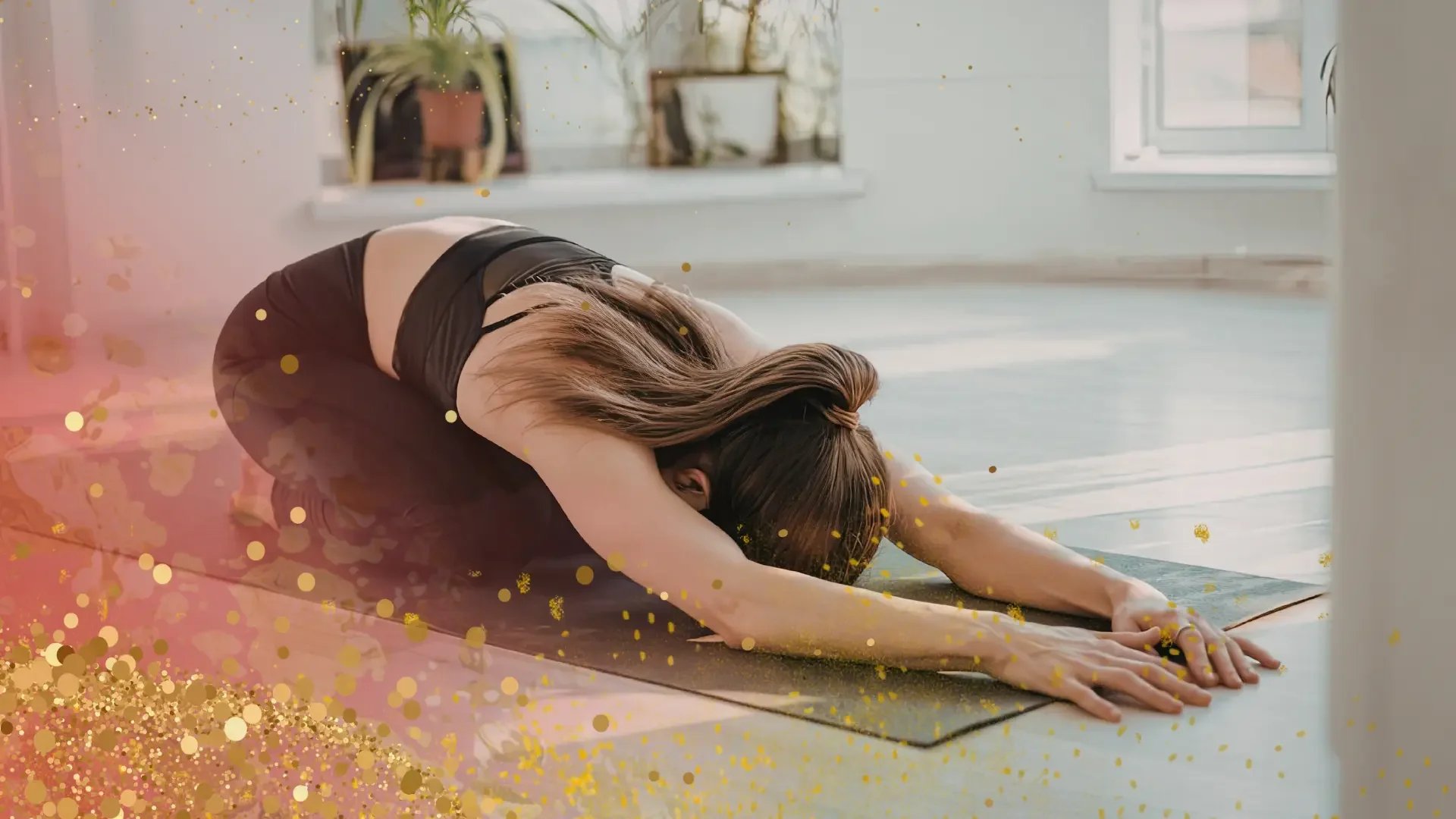
Ananda Balasana, or child’s pose can help relax the body for people with vaginismus.
2. Viparita Karani — Legs Up the Wall
Root chakra theme: Receiving support from the earth
This is one of the most restorative poses in yoga, and it's remarkably accessible. By inverting the legs, you encourage blood and lymphatic fluid to drain from the lower limbs, and you create a passive release of the hip flexors and pelvic floor.
More importantly, restorative inversion postures can reduce cortisol levels and activate the vagus nerve — a key player in nervous system regulation. A calmer vagal tone is often associated with reduced pelvic floor hypertonicity.
How to practice it: Sit sideways next to a wall, then swing your legs up as you lie back. A folded blanket under the sacrum can feel supportive. Close your eyes, soften your jaw, and stay for 2–15 minutes.
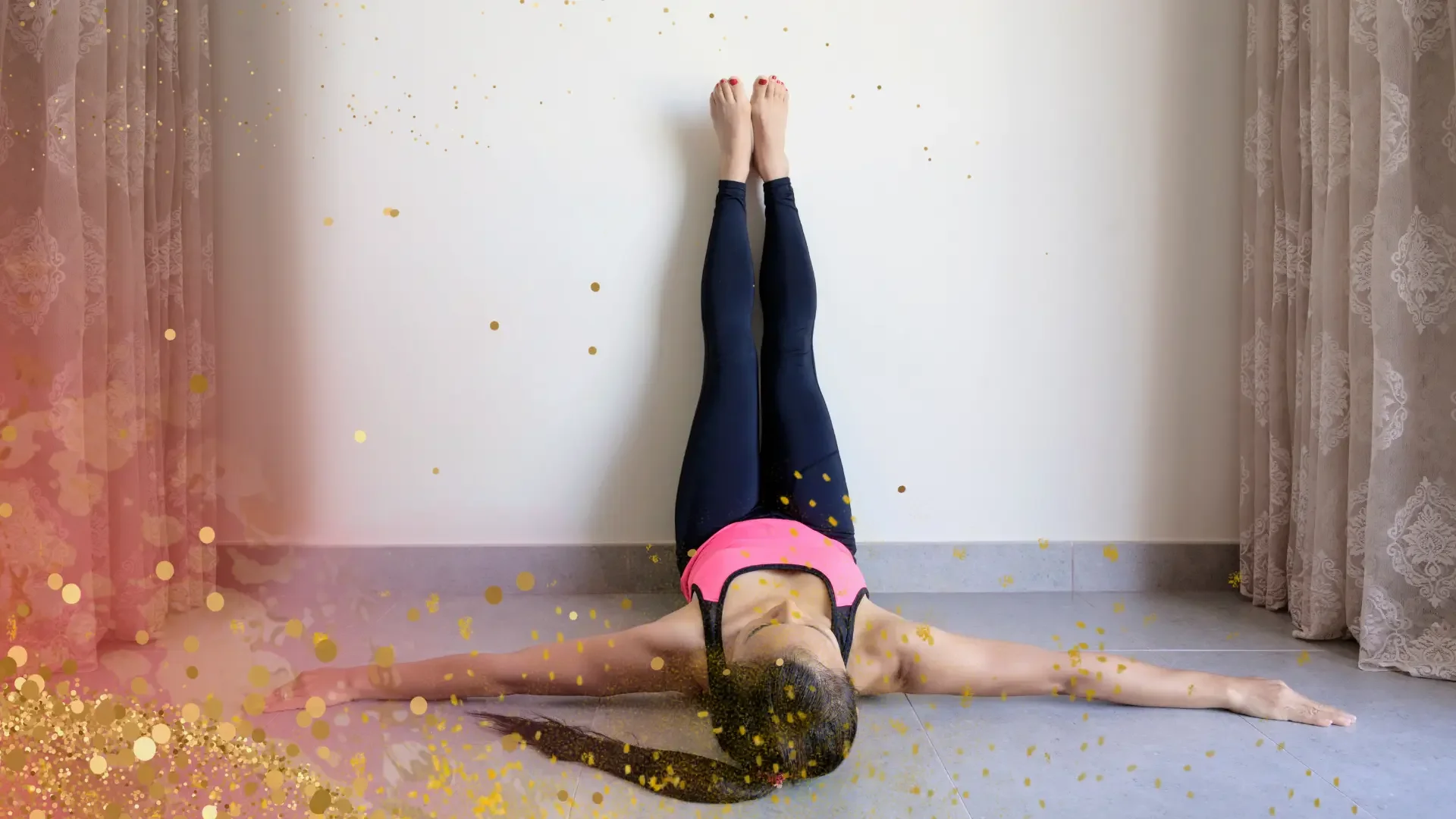
Legs up the wall is a great option to do before a dilating practice or bed to settle the nervous system.
3. Supta Baddha Konasana — Reclined Bound Angle Pose
Root chakra theme: Openness from a place of safety
Also called "Reclined Butterfly," this pose offers a gentle external rotation of the hips and an opening through the inner thighs — which can help release tension in the adductor muscles and hip rotators.
In yogic tradition, Baddha Konasana is one of the classic poses used to activate the root chakra — the shape of the body literally mirrors a flower blooming from the root up.
The key word here is reclined. When we're horizontal, the nervous system receives a signal that we're not in danger (you generally don't lie down when you're being chased). That being said, this posture can feel very exposed. If that’s the case, try the prop adjustment described below.
How to practice it: Lie on your back, bring the soles of the feet together, and let the knees fall open. Support each knee with a block or folded blanket if there's any strain. Place one hand on your low belly and breathe into your pelvis for 3–5 minutes.
If a full recline feels like too much — whether because of lower back sensitivity or simply because the openness feels overwhelming — try a supported ramp variation: stack one or two blocks on their lowest or medium height, then rest a bolster on top of them at an angle, creating an incline. Lie back onto the bolster so your torso is elevated and your hips are lower. This partial recline gives you all the hip-opening benefits with a gentler nervous system demand.
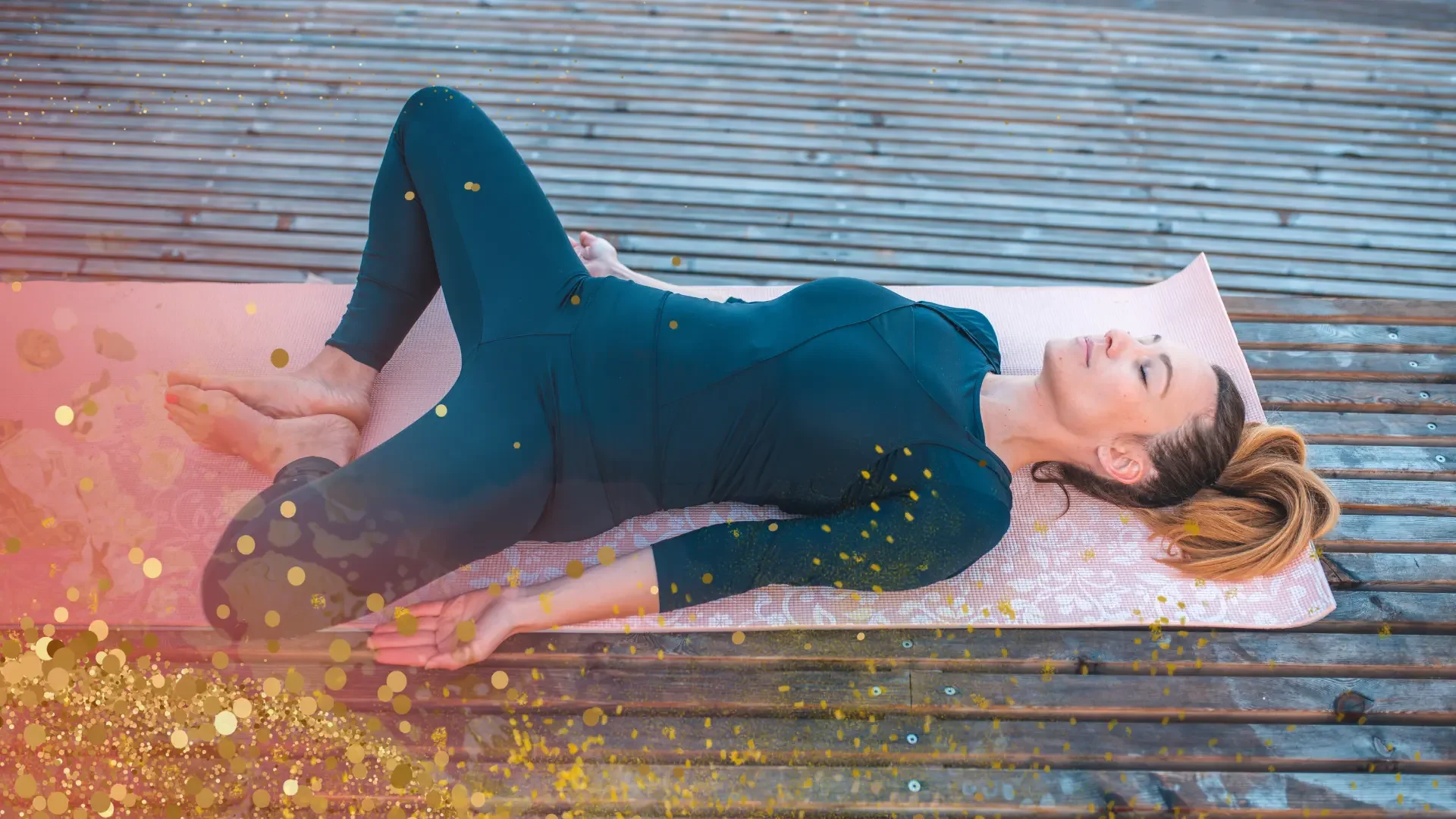
Supta Baddha Konasana can be made more comfortable with a pillow, bolster, and blocks to create an incline under the back.
4. Setu Bandha Sarvangasana — Bridge Pose
Root chakra theme: Strength rising from the ground
While many of the poses on this list are about softening and releasing, Bridge pose brings in something equally important: building a sense of embodied strength. Vaginismus healing isn't only about releasing — it's also about learning to inhabit and trust your body (and building strength in the appropriate muscle groups!).
Bridge pose activates the glutes, hamstrings, and spinal extensors while simultaneously stretching the hip flexors — muscles that are often shortened and gripped in people experiencing chronic pelvic tension.
From a root chakra perspective, lifting from the earth — literally pressing into the ground to rise — is a beautiful embodiment of Muladhara energy. You are supported. And from that support, you can rise.
How to practice it: Lie on your back with knees bent and feet hip-width apart. On an inhale, press into your feet and lift your hips. Hold for 5 breaths, then slowly lower. Repeat 3–5 times. You can try a supported version by placing a block under your lifted hips and relaxing there for 1-3 minutes.
A few important cues: in the active variation, try placing a block between your inner thighs and gently squeezing it as you lift — this activates the inner thighs and keeps the legs from splaying out. Watch out for the temptation to squeeze your glutes together to get your hips higher. That kind of bottom-clenching actually creates external rotation, which is the opposite of what we want here. The lift should come from the outer glutes and hamstrings instead. Looping a strap around your thighs (just above the knees) can help with this — it gives you something to press out against, which keeps the pelvis in better alignment and cues those outer glute fibers to do their job.
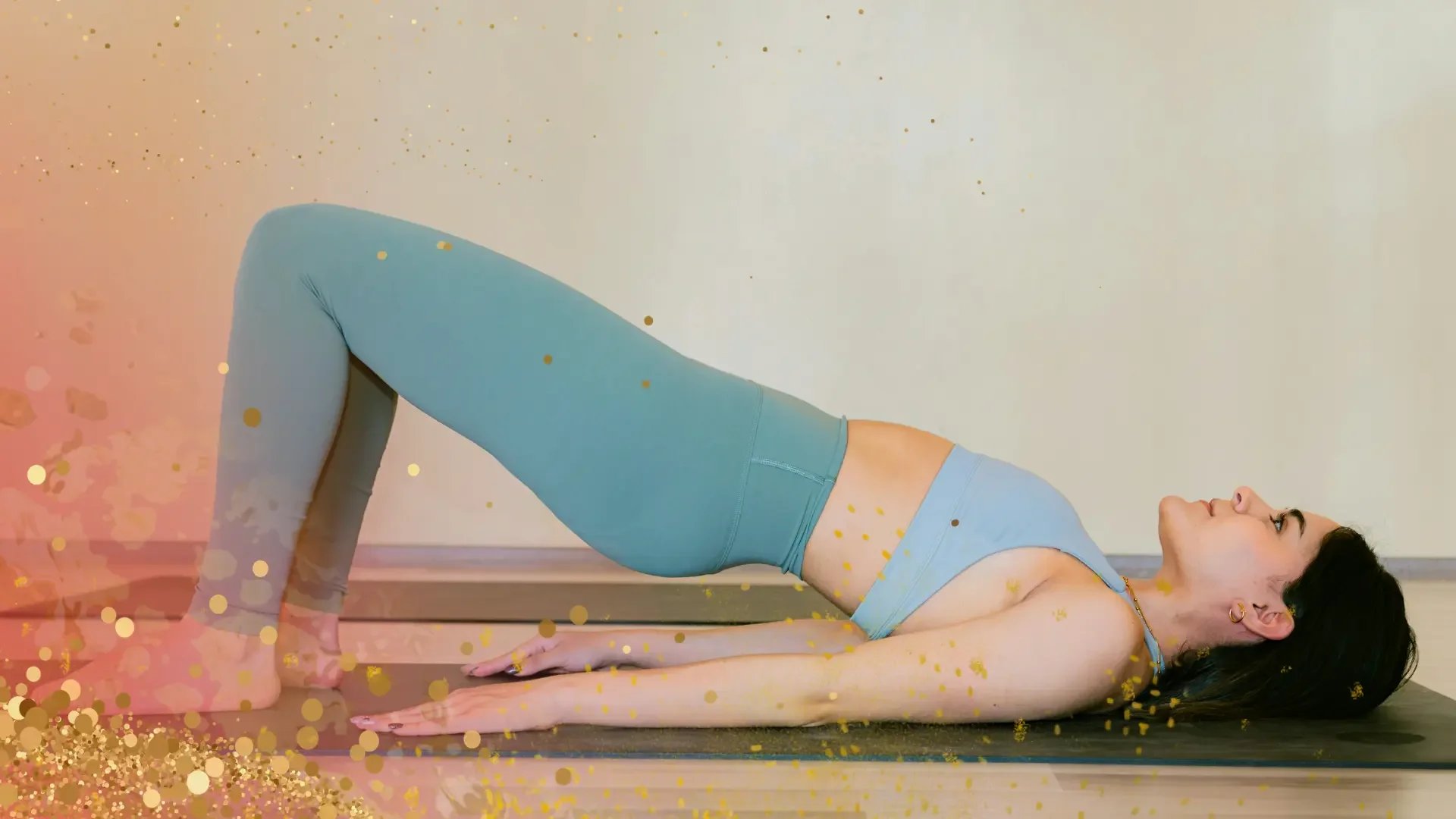
Setu Bandha Sarvangasana, or Bridge Pose, helps strengthen the appropriate muscles to support the pelvic floor.
5. Ananda Balasana — Happy Baby Pose
Root chakra theme: Playfulness and primal ease
Don't let the name fool you — this pose can be challenging for people with pelvic tension. But it's on this list precisely because it asks something important of you: can you find ease in a shape that feels vulnerable?
Happy Baby deeply stretches the inner thighs and groin, and creates length through the hip rotators. It also happens to look a little silly — and that's intentional. The root chakra governs our most primal, animal self. Sometimes healing requires giving yourself permission to be a little undignified.
How to practice it: Lie on your back, draw your knees toward your chest, then take hold of the outsides of your feet (or use a strap). Flex the feet, draw the knees toward your armpits, and gently rock side to side. Stay for 1–2 minutes.
One key alignment note: keep your tailbone on the floor. It might want to curl up as you draw the knees in, but that's actually a sign the hips are tight or gripping rather than releasing. If your tailbone keeps popping up, slide a folded blanket or pillow under your hips for support — this takes the strain out of the low back.
If this feels too intense, a gentler version is to simply hug both knees into the chest — which offers similar relief without the deep hip opening.
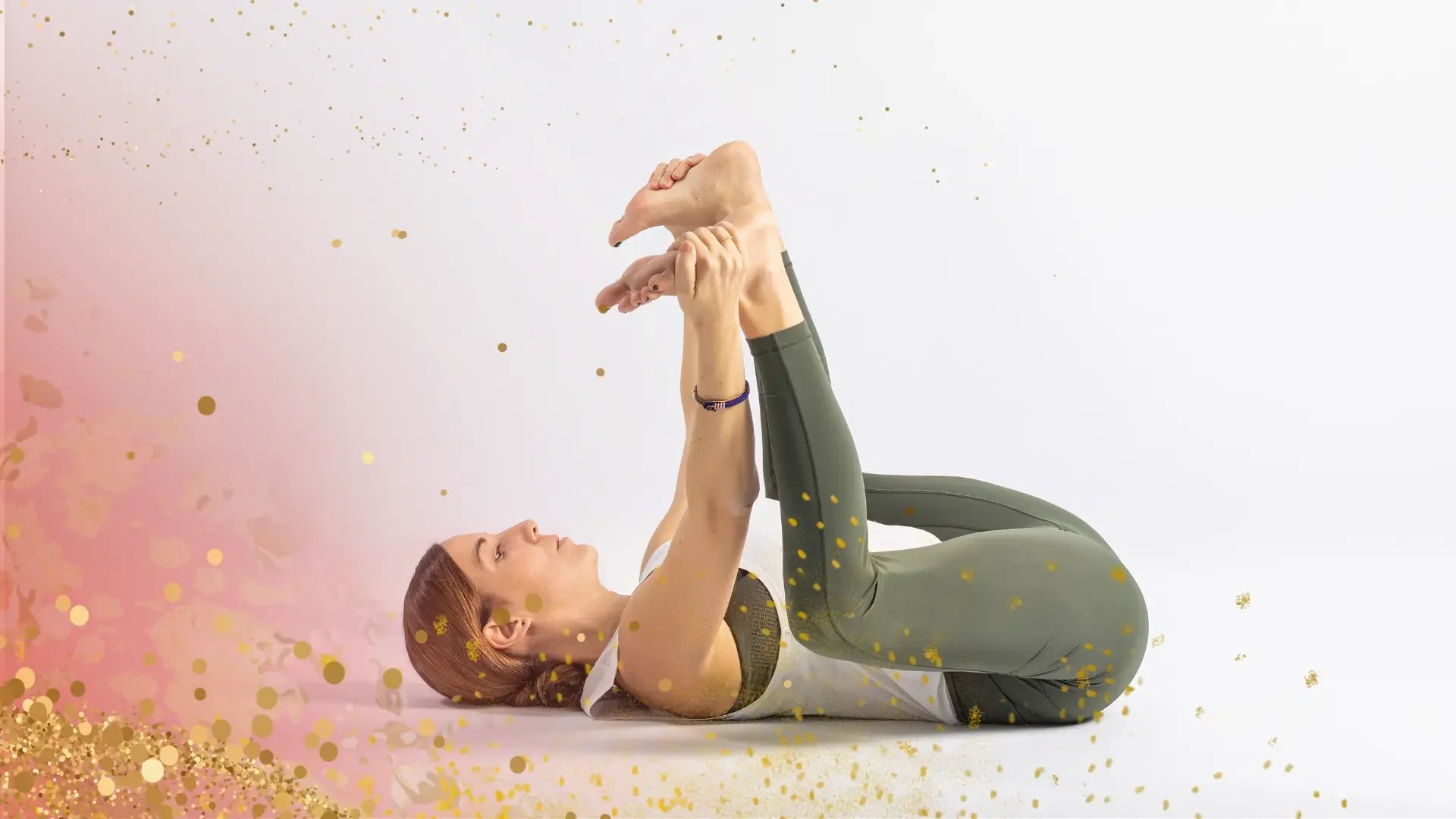
Happy Baby is a yoga pose that relaxes the hips and lower back.
6. Malasana — Garland Pose / Yogi Squat
Root chakra theme: Returning to our roots
Malasana is one of the most ancient human postures — it's literally how our ancestors rested and worked. Squatting is, in the most literal sense, a root pose.
This deep squat stretches the pelvic floor and perineum, activates the hip external rotators, and encourages a natural lengthening of the muscles that are often hypertonic in vaginismus.
In Ayurveda (yoga's sister science), Malasana is considered grounding for Vata dosha — the energy associated with movement and anxiety — making it especially relevant for pelvic floor conditions driven by nervous system dysregulation.
How to practice it: Stand with feet wider than hip-width, toes turned out. Slowly lower into a squat, bringing your hands to prayer position and your elbows inside your knees. Use a folded blanket under your heels if they don't reach the floor or a block beneath your seat— accessibility matters more than "perfect" form. Stay for 30 seconds to 2 minutes.
A key alignment note: make sure your knees are tracking in the same direction as your toes. When the knees cave inward while the toes point out, there's a torquing force on the knee joint that you really don't want. Let the knees follow the toes.
And here's something interesting to experiment with: how much you turn your feet out actually changes what gets stretched. Turning the hips and feet out wider tends to open the groin and inner thighs more. Turning them in less (closer to parallel) creates a different kind of opening — one that targets the pelvic floor more directly. Neither is wrong. They just serve different intentions, and you can play with both to find what your body is asking for that day.
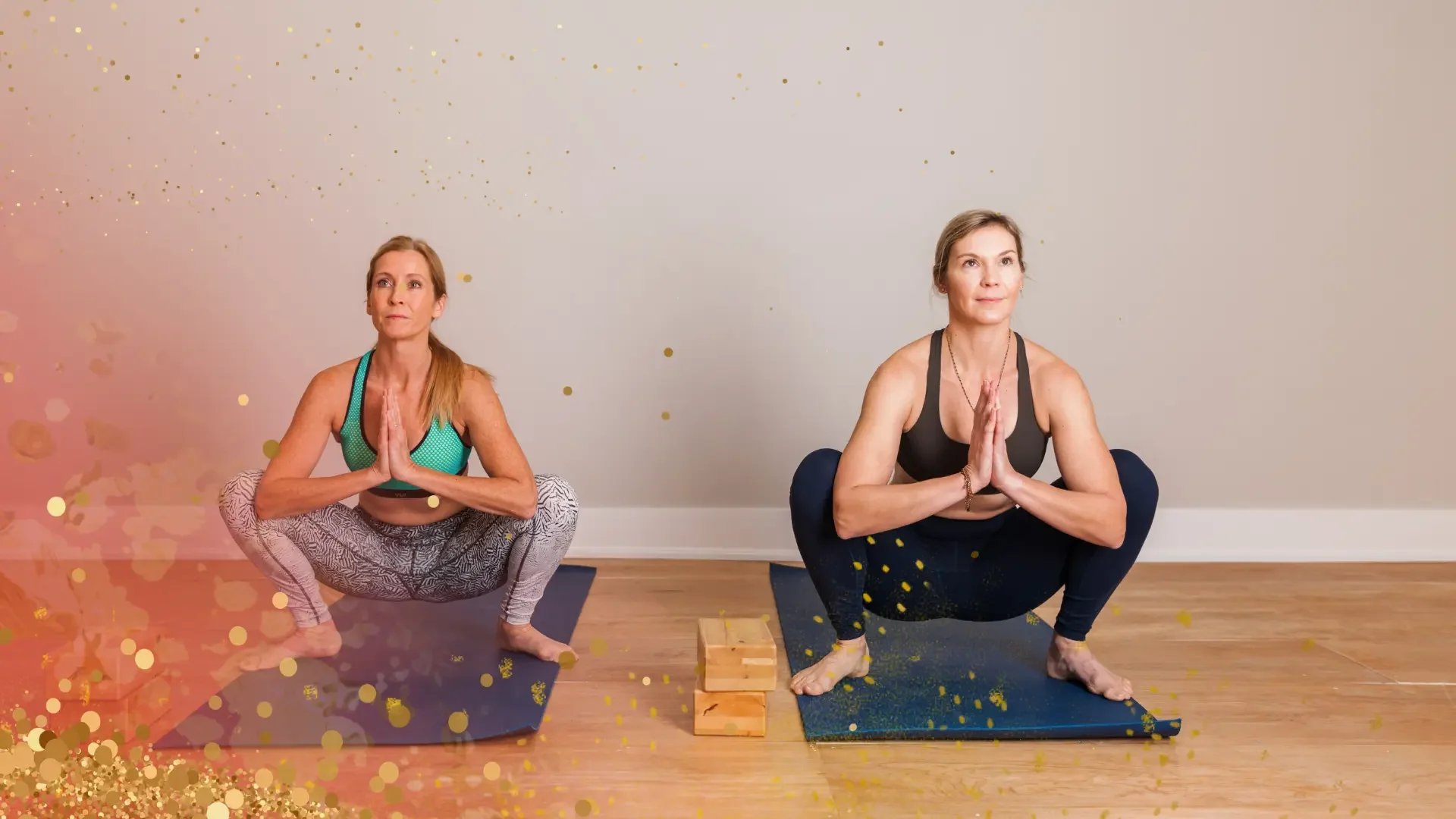
Try Malasana (Yogi Squat) with toes turned out and closer to parallel to see how the variations impact your inner thighs, groin, and pelvic floor.
7. Savasana — Corpse Pose
Root chakra theme: Complete surrender to the present moment
No list of grounding yoga poses would be complete without Savasana — the pose that many yoga teachers consider the most important and most difficult of all.
In Savasana, there is nothing to do. No goal to reach. No progress to make. You are simply a body, on the earth, breathing. This is Muladhara in its purest expression: I am here. I am safe. I belong.
For people with vaginismus, some of whom have spent months or years in a state of heightened vigilance around their bodies, learning to truly rest — without bracing, without scanning for danger — is genuinely therapeutic. The nervous system learns safety through repetition. Every Savasana is a small vote cast for "I am okay."
How to practice it: Lie flat on your back, arms slightly away from your sides, palms facing up. Let your feet fall open. Close your eyes — or if that feels uncomfortable, simply soften your gaze. Stay for at least 5–10 minutes. If your low back needs support, place a bolster or folded blanket under your knees. If you’re doing a longer practice like Yoga Nidra, you can get cozy beforehand with warm socks and a blanket over your body.
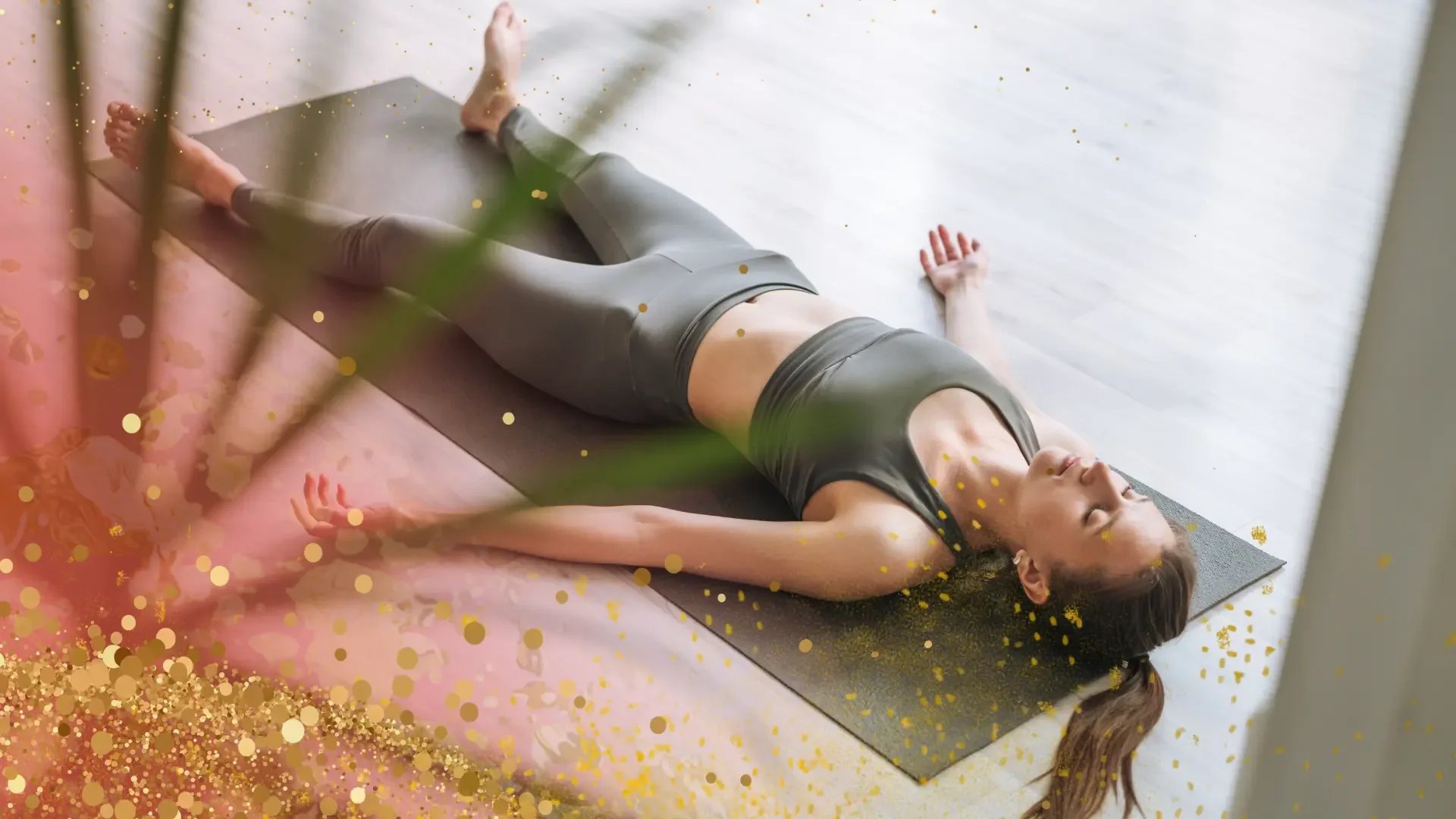
The most challenging pose of them all, Savasana, requires complete relaxation.
Bringing It All Together
The root chakra teaches us that healing begins at the foundation. Not with force, not with will, but with presence, safety, and the willingness to feel rooted in your own body.
These poses won't resolve vaginismus on their own. But practiced consistently, they can help shift your nervous system out of chronic protection mode, open the physical structures involved in pelvic floor tension, and — perhaps most importantly — help you build a new relationship with a body you may have felt betrayed by.
If you're ready to go deeper, check out on-demand yoga classes at Yoga for Vaginismus, which are hosted on YouTube and designed specifically with your healing in mind.
Remember, you are not stuck. You are just finding your roots.