Yin Yoga for Vaginismus: A 15-Minute Practice to Calm Your Nervous System
If you've been navigating vaginismus for any length of time, someone has probably told you to relax. Maybe a doctor. Maybe a well-meaning partner. Maybe yourself, in a moment of frustration.
Here's the thing: your pelvic floor muscles aren't misbehaving. They're protecting you. Vaginismus is a nervous system response. Your body learned, somewhere along the way, that tension equals safety. And willpower alone doesn't reach the parts of the brain that are running the show. But slow, gentle, grounding movement can.
This is where yin yoga comes in.
What Yin Yoga Actually Does (And Why It Matters for Vaginismus)
Yin yoga is characterized by long, passive holds — typically 3 to 5 minutes — in seated or reclined positions that target the deeper connective tissues of the body: fascia, ligaments, and joints. Unlike more active styles of yoga, yin invites the muscles to soften rather than engage. You're not building strength here. You're building the capacity to release.
And there's solid research behind why that matters. The slow, static nature of yin yoga — holding postures without excessive movement and allowing gravity to act on the body — activates the parasympathetic nervous system and signals the body to relax and unwind. Paired with deep breathing, it dampens the sympathetic nervous system's activity and supports that parasympathetic shift. A2024 study published in Frontiers in Psychiatry found significant reductions in both state and trait anxiety following a yin yoga intervention — suggesting that the effects go beyond the mat and accumulate over time.
For people with vaginismus, this is a big deal. When your nervous system feels genuinely safe — not just told to be safe — the pelvic floor has permission to soften. You can't force that. But you can create the conditions for it.
A Practice Built for This
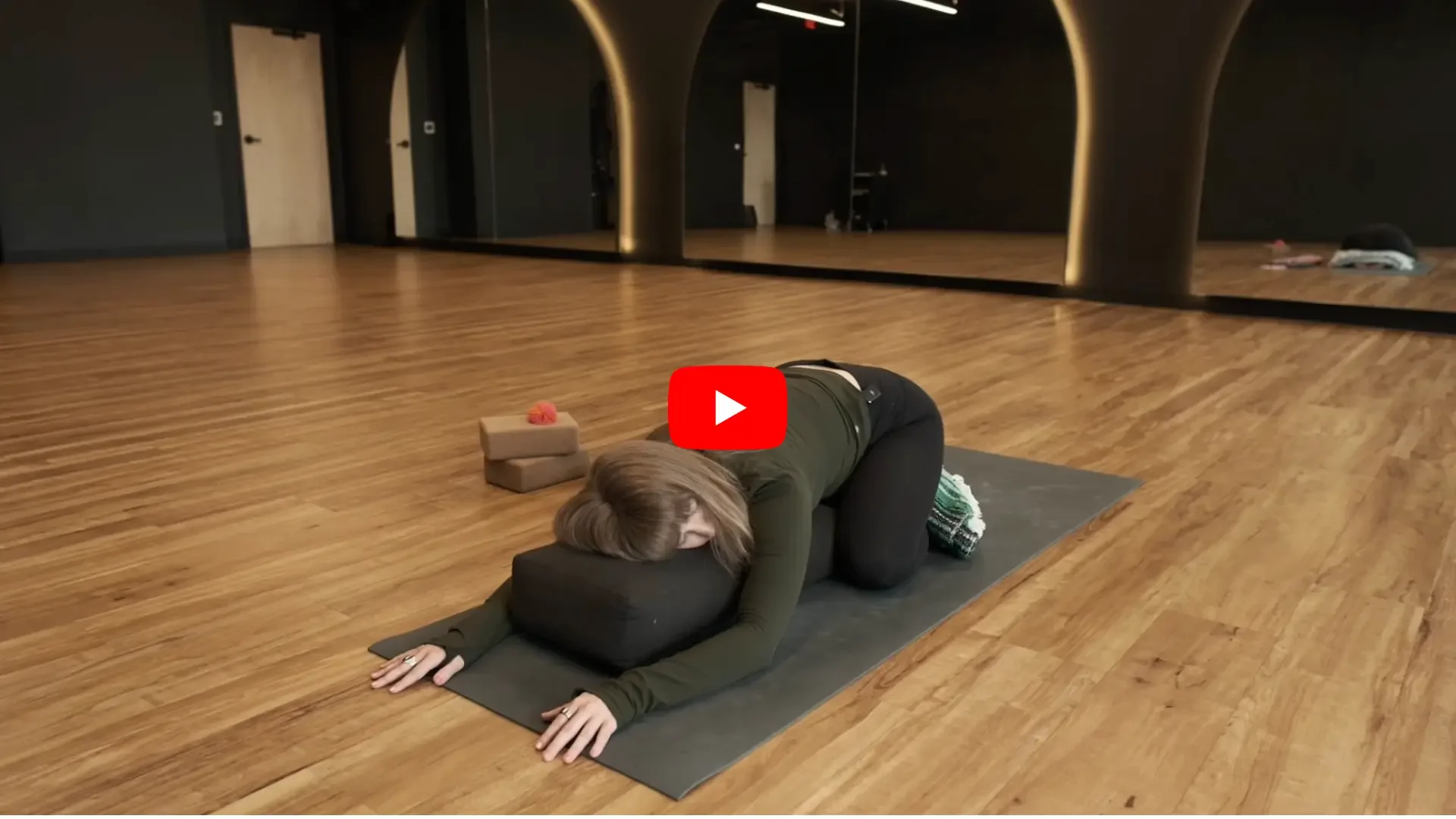
Cozy Vibes Yin-ish Yoga for Vaginismus class is exactly what it sounds like: cozy. (Plus, it's only 15 minutes for busy days.)
Here's what we move through:
Hero's Pose with a Koosh Ball: Hero's pose (Virasana) is a grounding kneeling posture that gently opens the fronts of the thighs and ankles. In this practice, we add a koosh ball (you can use something similarly soft, like a balled-up sock) placed beneath the vulva as a sensory feedback tool. The idea, drawn from the work of pelvic floor yoga pioneerLeslie Howard, is to give your breath somewhere to go. As you inhale and direct your breath downward into the pelvic floor, you can actually feel the gentle response against the koosh ball — a real, tangible moment of connection with a part of the body that vaginismus can make feel distant, braced, or hard to access. It's not about doing anything in particular. It's about feeling and listening.
Child's Pose: Child's pose (Balasana) is a comforting shape. Folding forward, forehead toward the earth, arms extended — it's a posture of returning and grounding. In yogic philosophy, this shape echoes the quality of pratyahara, the withdrawal of the senses inward. You're not escaping. You're coming home to yourself.
Half Child's Pose: From child's pose, we open one leg out to the side — creating a gentle, passive stretch along the inner thigh of the extended leg. The adductors (inner thigh muscles) are anatomically connected to the pelvic floor; when they carry chronic tension, the pelvic floor often does too. This shape invites a slow release in both places at once, without forcing anything. Gravity does the work. You just breathe.
Seated Meditation with the Option to Sway: We close with stillness — or something close to it. Gentle swaying is offered as an option: rhythmic, repetitive movement calms the body. Think of how instinctively humans rock babies and children when they're distressed.
When to Practice This
This class is great for:
Winding down at the end of a long day
Before a dilating session, to help your nervous system shift gears
Honestly, whenever you need it
You don't need to be flexible. You don't need yoga experience. You need a block, a sock, maybe a bolster or a blanket, and 15 minutes.
Ready to Practice?
Watch the Cozy Vibes class on YouTube →
And if this style of practice resonates with you, there are more classes like this in the Yoga for Vaginismus on-demand library — a growing collection of recorded practices designed specifically for pelvic floor healing, nervous system support for people with vaginismus.